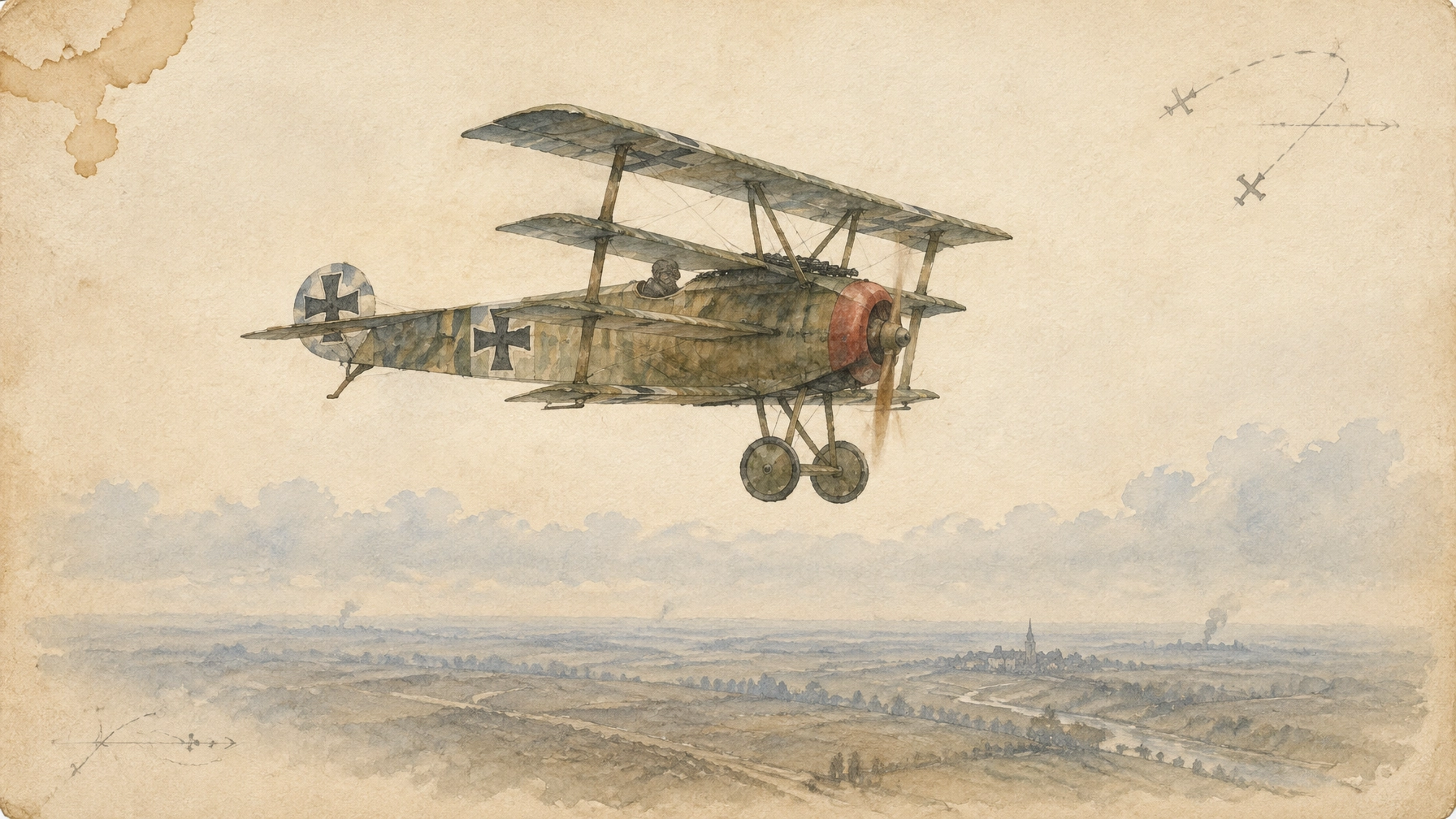
The Fokker Dr1 was good at making a close fight uncomfortable for its opponent. Its three wings gave it a strong climb and a tight turn at low speed, but not the pace to chase a faster aeroplane across the sky. That combination shaped how its pilots had to fight: get close, make the other pilot turn, and avoid a contest of speed.
The triplane is remembered above all as the Red Baron's mount. Yet the famous all-red finish belonged to Baron von Richthofen and a few other pilots, not to every Dr.I. Most wore less conspicuous German camouflage. The machine's reputation has often overshadowed its more useful lesson: an aeroplane's strengths only matter when a pilot can bring the fight into the conditions where they count.
What the Fokker Dr1 could, and could not, do
The Dr.I's three narrow wings gave it plenty of lifting area for a compact fighter. In a close engagement, that helped it change direction quickly and climb strongly, particularly at lower altitudes. Against British fighters in the early months of 1918, a Dr.I could be a difficult opponent to shake in a slow, turning fight.
That did not make it the best aeroplane in every part of the sky. It was comparatively slow in level flight and in a dive. Its climbing and turning advantages also weakened with altitude, while a faster opponent could keep its speed, extend away or decline to turn with it.
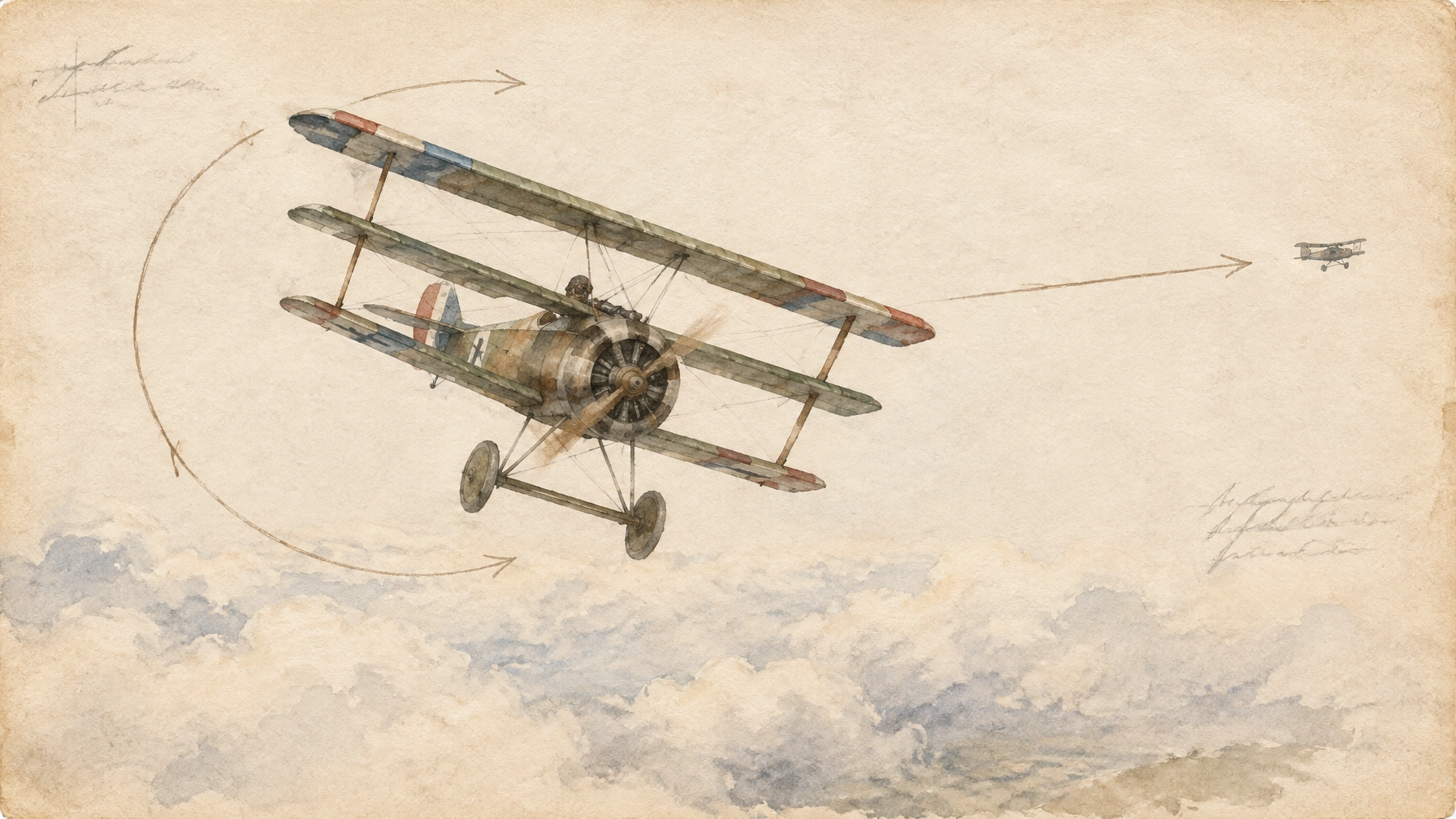
The Dr.I's main advantage was therefore local, not universal. If it could get inside an opponent's turn and keep the fight close, it had a chance to dictate the next move. If the other pilot kept the range open and conserved speed, the triplane could struggle to force an engagement on its own terms.
A turning fight, not a running pursuit
A pilot in a Dr.I needed to think carefully before committing. A fast pursuit could leave the triplane stretched out behind an opponent it could not catch. Diving after a faster aeroplane was no safer: the Dr.I did not have the same speed to recover the ground, and a dive could carry a pilot away from his formation or beyond a useful position.
A turning fight offered a better use for the aircraft. The pilot could press close, use the Dr.I's agility to stay inside the opponent's circle, and look for a brief firing opportunity. But turning hard also spends energy. If the opponent refused the turn and continued straight, the Dr.I pilot had to decide whether to break off or keep manoeuvring while losing position and speed.
This is the difference between being manoeuvrable and being able to control a fight. The Dr.I was agile enough to make a turning opponent pay. It was not fast enough to make every opponent turn.
Richthofen's advantage began before the turn
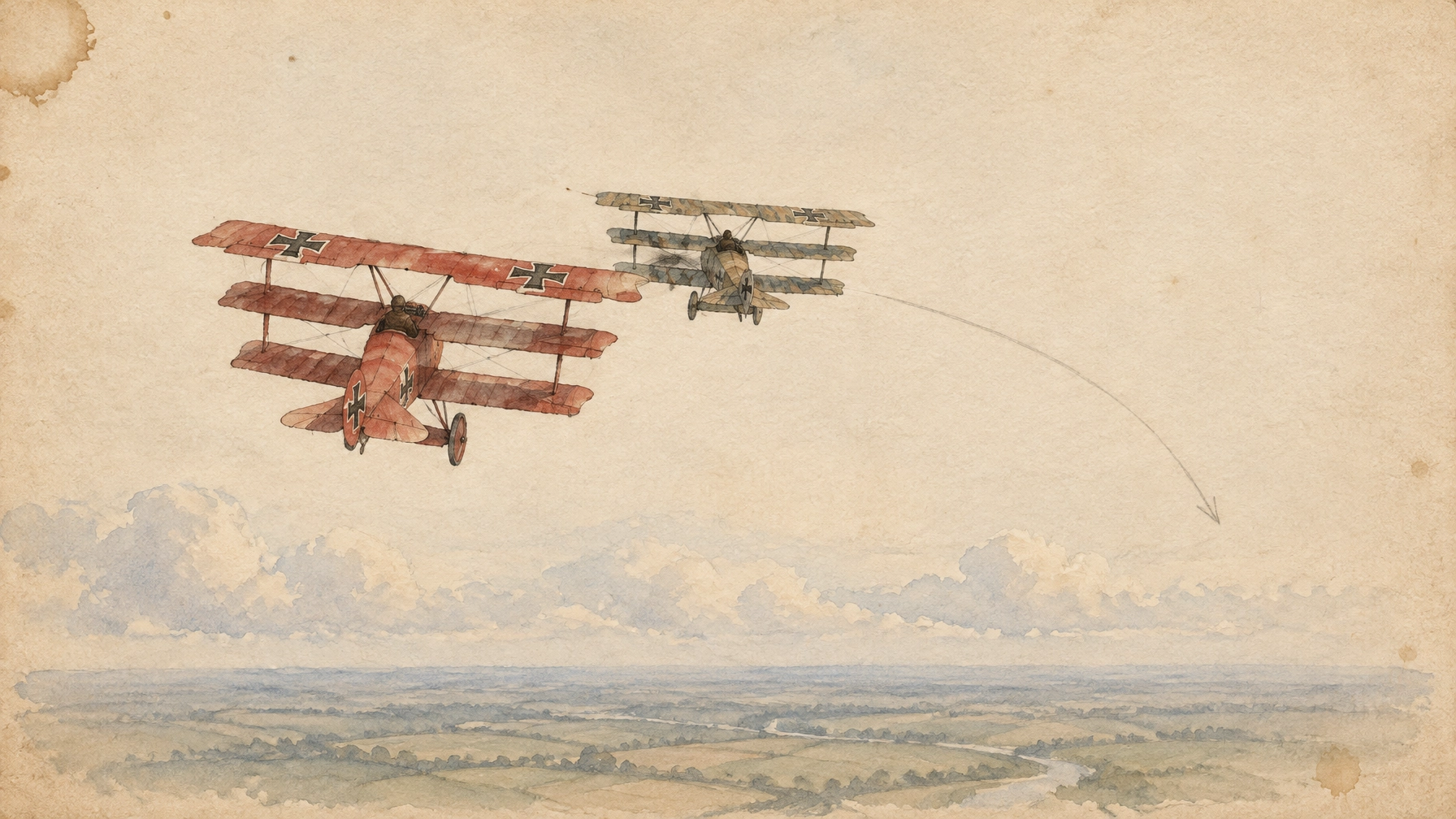
Richthofen's success with the type is often reduced to its tight turning ability. His approach also depended on how and when he entered a fight. An altitude advantage gave him the choice to descend on a target, approach quickly and close the range before the engagement became a contest of sustained speed.
That choice mattered. In a short, close pass, a pilot could use surprise and position to create an opening. Once the fight tightened, the Dr.I's turning performance became more useful. A long pursuit against a faster aeroplane would ask the machine to do what it did poorly.
The principle was not "turn with anything, anywhere." It was to choose a favourable entry, bring the opponent into close range, and use the Dr.I's handling while the conditions still favoured it. This was a specialised way to fight, not a guarantee of victory.
The wings were a serious concern
The Dr.I's reputation was affected early by structural failures. In late October 1917, two aircraft broke up in flight. The type was grounded while the wing structure and workmanship were investigated and changes made. Strengthened wings passed testing in late November, after which the triplane returned to service and deliveries resumed.
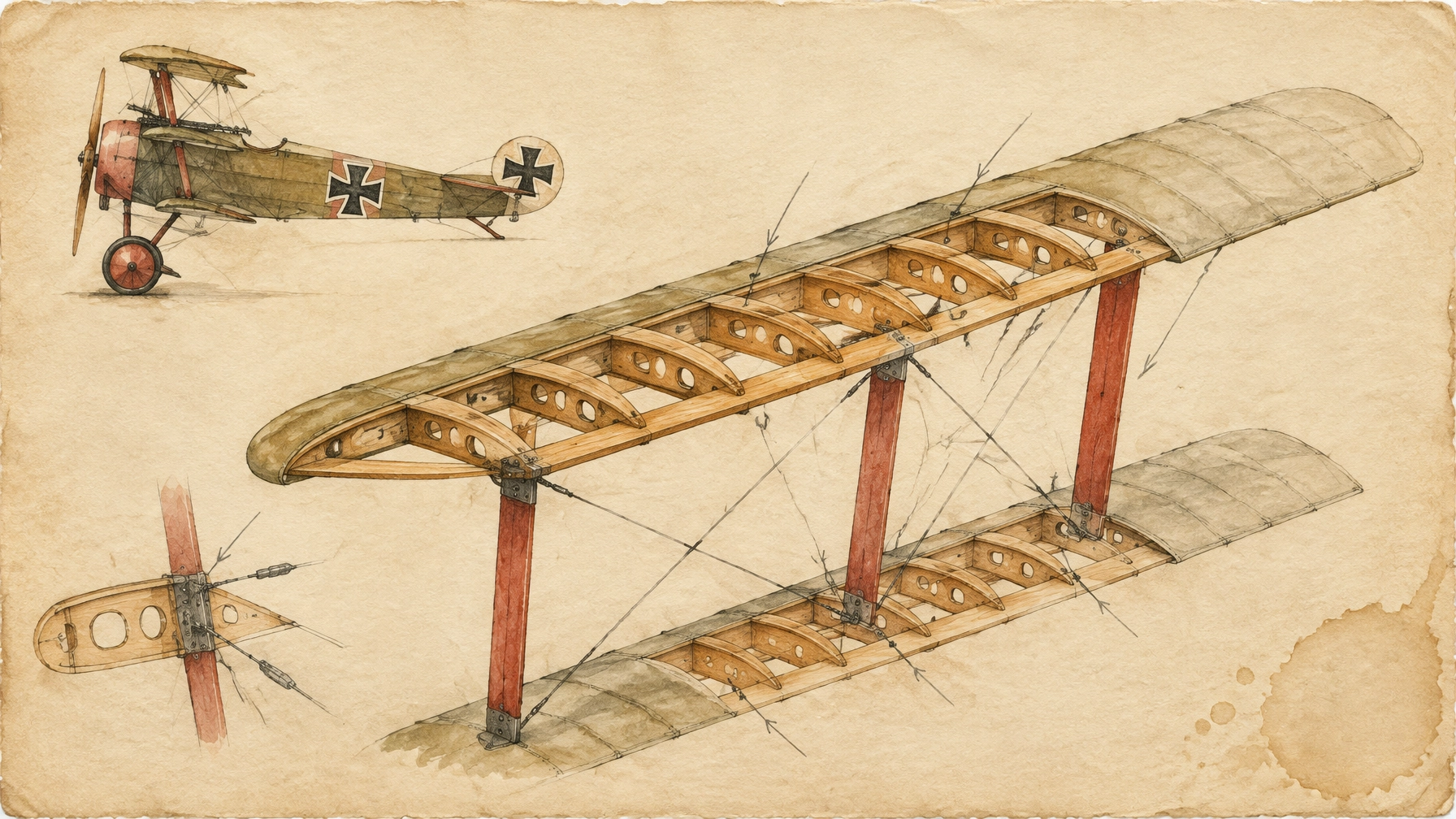
The episode is a reminder that a fighter's performance figures do not tell the whole story. A pilot's confidence depended on the condition and construction of the airframe as well as its design. For more detail on the aircraft's development and variants, see the Fokker Dr.I account at Flying Machines and this overview of Dr.I wing failures.
The engine brought another limitation. The Dr.I used the Oberursel Ur.II rotary, but reliability and serviceability could be troublesome, particularly as the war continued and Germany faced shortages of suitable lubricants. The problem was not that every engine failed; it was that an aircraft already limited in speed and altitude needed dependable power to make its strengths count.
By 1918, faster fighters with better high-altitude performance were increasingly difficult to meet on equal terms. The Dr.I remained dangerous in a close turn, but its narrow performance envelope and operational concerns made it less suited to the changing demands of the Front.
The myth and the machine
Popular images can make the Fokker triplane look like the ultimate fighter: three wings, red paint and a famous pilot. The real Dr.I was more particular. It could climb and turn well in the right conditions, but it could not match faster machines in a prolonged chase or a dive, and its advantages faded at altitude.
That does not make it a failure. It makes it a specialised fighter whose strengths and weaknesses demanded tactical judgement. Among WW1 fighter planes, the Dr.I stands out not because it could do everything, but because it rewarded pilots who understood what it could do best.
A practical lesson for a WW1 dogfight
When flying any fighter, ask what kind of fight your aeroplane can sustain. If your advantage is a tight turn, do not waste it in a long pursuit. If your opponent has more speed, consider whether you can use altitude and position to make a brief attack, or whether the wiser choice is to preserve energy and break away.
That is as true in a game as it is in the history of the Dr.I. In Combat Aces: WWI, you can fly against German types like the Dr.I and feel how climb and turning ability shape a decision. Try it, and see whether you can bring the fight into the triplane's envelope.
FAQ
What was the Fokker Dr1 best at?
The Fokker Dr1 was best at close-range manoeuvring, especially turning fights at lower altitude. It could climb strongly and change direction quickly, but it was not a fast pursuit or diving fighter.
Did every Fokker triplane have a red finish?
No. The famous all-red finish is associated with Richthofen and a few other pilots. Many Fokker Dr.Is flew in subdued German camouflage.
Why was the Dr.I grounded in 1917?
After two aircraft broke up in flight in late October 1917, the type was grounded while its wing structure and construction were investigated. Strengthened wings were tested in late November before the triplane returned to service.
Could the Dr.I catch a faster fighter?
Not reliably in a running pursuit or dive. The Dr.I's strengths were climbing and turning at close range, so a faster opponent could often keep speed and refuse that kind of fight.